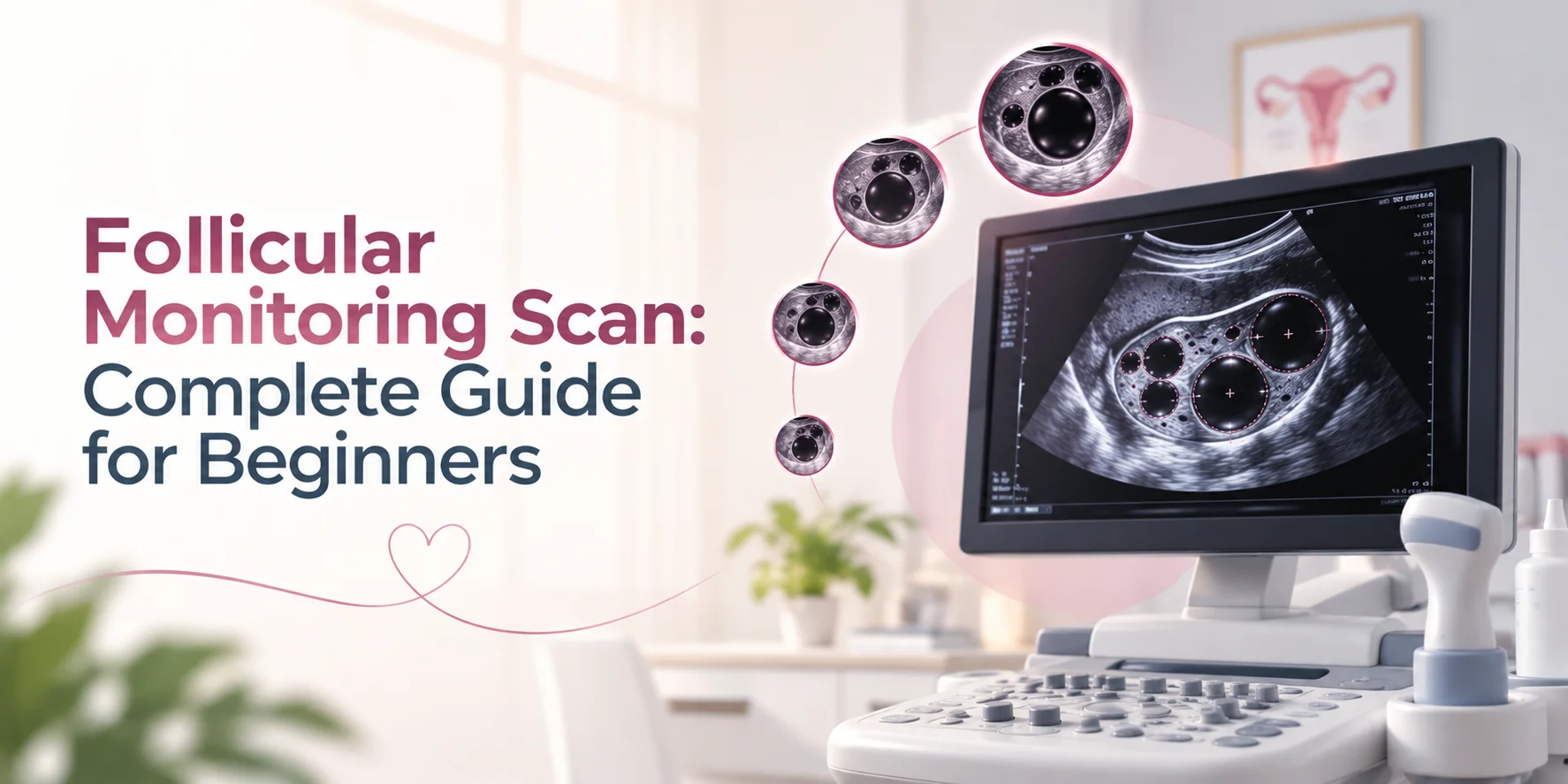
Follicular monitoring scan is a pelvic ultrasound that monitors follicular development in the ovaries throughout a menstrual cycle. It tells doctors when an egg is due to mature and when ovulation is due to happen.
This is useful information when a couple is trying to conceive by way of fertility treatment, timed intercourse, or procedures such as IUI treatment process.
What Is Follicular Monitoring?
For those new to fertility testing, you may be wondering what is follicular monitoring and why you need more than one scan. The follicles are tiny sacs of fluid in the ovaries in which eggs mature. The observation, instead of just one scan, enables the doctor to observe how they develop over the period of a few days.
- Growth of the follicles: The scan counts the follicles and tracks their growth over time.
- Endometrial lining: The specialist can tell the quality and the thickness of the lining of the uterine.
- Treatment planning: The information can be used to help plan when to start medication, have intercourse, or be inseminated.
How Ovulation Takes Place
Understanding how ovulation works can help you understand the ultrasound. One follicle in a normal cycle will somehow become dominant and continue growing until the egg is mature. The egg is released from the ovary by hormonal changes.
- Follicle selection: It is possible for several follicles to be developing simultaneously, but only one becomes dominant. This follicle will grow, and it will become the hormone-secreting corpus luteum in menstruation or pregnancy.
- Hormonal trigger: Ovulation is induced by a surge of luteinizing hormone (LH).
- Process of egg release: The mature follicle bursts and releases the egg for fertilization.
Why Do Doctors Track Follicles?
A follicular scan for fertility shows more during the cycle. This is particularly useful when ovulation is irregular, you are taking fertility medication, or treatment needs to be timed to the minute.
- For natural cycles: Watching can help you to predict when you are going to ovulate.
- For medicated cycles: The ovaries’ response to fertility medicines can be monitored by doctors.
- Timing of procedures: Results can help to plan procedures to coincide with when ovulation is expected to take place.
What happens during the scan?
For those asking what is follicular monitoring, the scan is generally simple. Whereas a transvaginal ultrasound is a more common choice, as it allows better visualization of the uterus and ovaries. Your doctor may advise repeat scans if the follicles are getting bigger.
During the appointment, a small ultrasound probe is gently placed into the vagina to measure the size of the maturing follicles.
- Follow-up: Another scan may be arranged in a couple of days to monitor changes.
What the Scan Can Tell You
An explanation of how ovulation works also clarifies why the size of a follicle is important. A growing follicle may provide some information on when ovulation is about to occur, but follicle size by itself is not a predictor of ovulation.
- Maturity: Your doctor evaluates whether or not a dominant follicle appears to be mature enough to ovulate.
- Lining check: Uterine lining may also be checked at the time of the same scan.
- Signs of ovulation: These changes in the follicle can be used to predict whether ovulation has occurred.
Monitoring Of Follicular During Fertility Treatment
A follicular scan for fertility may be used in treatment when timing is critical. Your doctor may use information from the ultrasounds, hormone tests, ovulation kits, or medication protocols to determine what the best next step is for you.
- Ovulation Medicines: When medicines are used, follicular response can be monitored.
- Cycle modification: You can be advised to take your treatment at different timings based on your scan reports.
When Should You Have It?
Follicular scan for fertility timing is determined by your menstrual cycle and the reason you are being monitored. Some people may start scanning early in their cycle, and some may start later, depending on when they normally ovulate or as part of their treatment plan.
Understanding how ovulation works will make the appointments less daunting, and understanding what is follicular monitoring will help you understand why you might need more than one scan.
Your doctor will determine the optimal timing of scans based on your cycle and treatment needs. If you are concerned about your scan results, request your doctor to clarify the results and how they pertain directly to your treatment plan.