Why PGT Matters in IVF
If you are considering genetic testing as part of IVF, you might encounter multiple terms that seem complex at first. PGT (Preimplantation Genetic Testing) is a genetic screening that tests embryos for specific genetic or chromosomal abnormalities prior to being considered for transfer. Knowing the different types of PGT will help you understand why your fertility doctor may suggest a certain test.
Understanding PGT
Most of the patients start by asking what is pgt test and if it is required for all IVF cycles. PGT is a group of tests for different genetic issues. The right option is guided by your history.
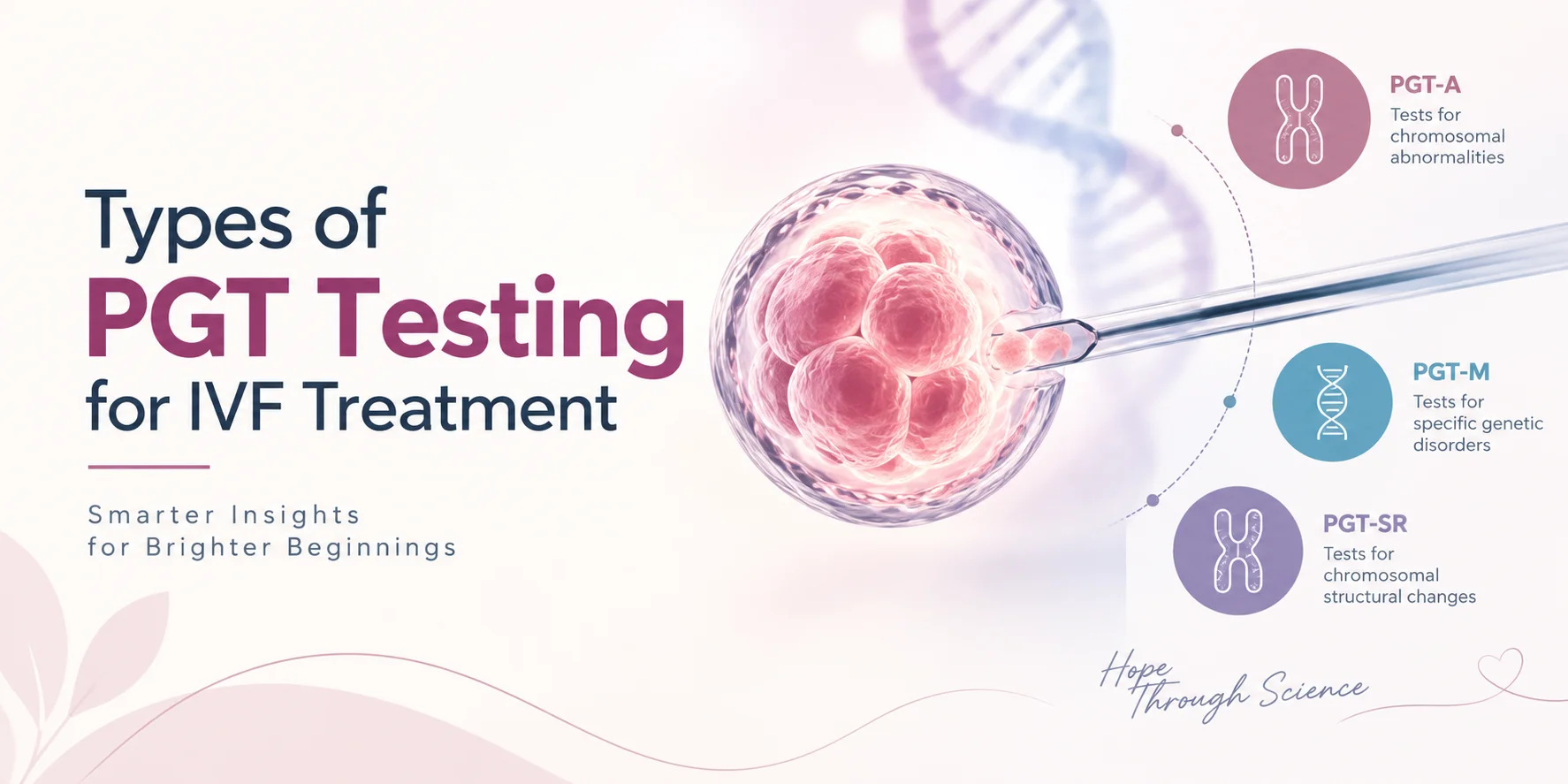
- PGT-A: To identify extra or missing chromosomes, a condition called aneuploidy.
- PGT-M: Screening for a monogenic condition.
- PGT-SR: Identifies specific chromosome abnormalities such as structural rearrangement.
What is embryo genetic testing?
what is genetic testing of embryos from the practical, day-to-day perspective? During IVF, embryos grow in the lab, and a small group of cells may be removed for genetic testing. The embryo is generally cryopreserved while testing is conducted, and results may assist the clinical team in selecting which embryos may be appropriate for transfer.
- Embryo biopsy: A small number of cells are removed, usually from the outer layer of a blastocyst.
- Lab analysis: The sample is analyzed by the appropriate test methods.
- Result review: Your fertility specialist will explain the implications of the results to you before any decision to transfer is made.
How PGT Is Part of IVF
Knowing the IVF process step by step can help you understand at what stage PGT is applied. Then the ovaries are stimulated, eggs are retrieved, and fertilization takes place in the lab. Embryos are cultured, cryopreserved for subsequent transfer, and biopsied as clinically indicated.
- Monitoring of embryonic development: Embryos are cultivated and tracked until they reach the blastocyst stage.
Testing embryos for chromosomal alterations:
What is pgt test is a genetic screening test which is done to check whether embryo contains the right number of chromosomes. The information can allow the fertility doctor to rank the embryos with the best potential.
- Identifying Chromosome Abnormalities: PGT-A can identify embryos with an abnormal number of chromosomes, such as too many or too few.
- Some embryos have a blend of cells that carry different numbers or types of chromosomes. These are called mosaic embryos. These results may be more difficult to interpret and are typically subjected to review.
- Your Doctor’s Guidance: PGT-A results are useful information, but they are no guarantee that you will get pregnant. Your fertility specialist will be able to explain what the results mean for you.
PGT-M and PGT-SR
Another important question is what is genetic testing of embryos for a known genetic issue when a family has a genetic concern? PGT-M may check for a particular inherited single-gene disorder, whereas PGT-SR can detect specific unbalanced chromosome abnormalities such as those arising from structural rearrangements. Genetic counseling is advisable.
- Known condition: If there is a known gene-related condition in the family, PGT-M is tailored to this condition.
- Chromosome rearrangement: PGT-SR is concerned with structural chromosome differences that can lead to an unbalanced embryo in terms of its chromosomes.
- Individualized planning: Needs for testing will vary, and your clinic might include counseling prior to IVF.
How Testing Alters the IVF Plan
Understanding the ivf process step by step can be useful when PGT is involved in your treatment.
Testing is a non-compulsory laboratory process that takes place after the embryos have been developed, which possibly results in an impact on the choice of the embryos that are transferred. Before undergoing the testing, you should talk about the possible outcomes with your doctor.
- Preparation: Prior to starting your IVF treatment process, you may need to complete a few additional tasks related to preparation for the genetic testing.
- Embryo selection: This, together with other clinical parameters and the development of the embryo, is used to select embryos for transfer.
- Transfer timing: Testing is performed after freezing, with transfer planned for a later date.
Is PGT Right for Everyone?
The ivf process step by step is the same for patients, but it’s an individual decision to whether to use PGT. Your specialist may take into account your age, reproductive history, family history, IVF results, and nature of the disorder.
Take time to discuss the advantages, limitations, and potential results with your fertility doctor. Understanding what is pgt test and what the results can give you better clarity and peace of mind when considering PGT as part of your IVF treatment.